
Common Storm Damage Tree Issues in Southern Indiana Neighborhoods

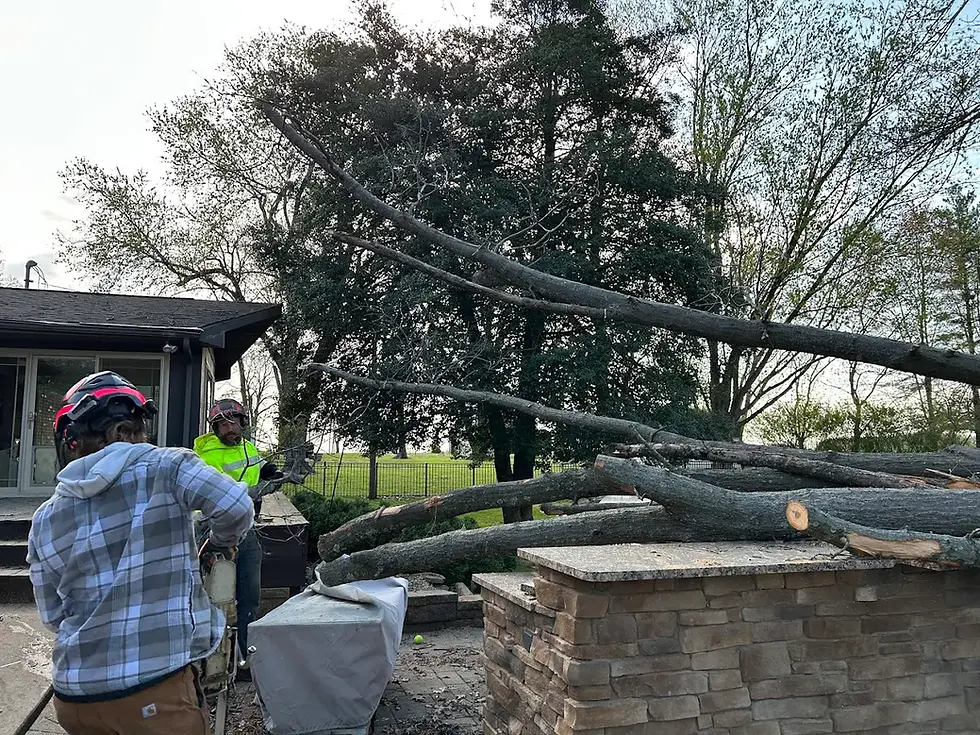
Storm damage tree issues in Southern Indiana are something homeowners deal with often, especially during strong seasonal storms that sweep through Evansville and surrounding counties. High winds, heavy rain, and saturated soil can quickly turn a healthy-looking tree into a serious safety hazard.
For homeowners, knowing what to look for after a storm can prevent property damage, injuries, and costly emergency situations. In many cases, early action makes all the difference.
At Gray’s Tree & Crane LLC, we specialize in helping Southern Indiana property owners handle storm-related tree hazards quickly and safely with 24/7 emergency response and crane-assisted removal services.
Why Storm Damage Tree Issues in Southern Indiana Are So Common
Southern Indiana experiences a mix of weather conditions that put trees under constant stress. Storms often bring:
Strong straight-line winds
Heavy rainfall and saturated soil
Thunderstorms with lightning strikes
Seasonal ice buildup in colder months
When soil becomes soft and roots lose stability, even mature trees can fail unexpectedly. Neighborhoods in Evansville, Vanderburgh County, Posey County, and Warrick County are especially vulnerable due to dense residential tree coverage and older tree growth.
These conditions make storm damage tree issues in Southern Indiana more frequent than many homeowners realize.
Most Common Storm Damage Tree Issues in Southern Indiana Neighborhoods
After a storm passes, the damage is not always obvious. Some issues are immediate, while others develop over time. Here are the most common problems homeowners should watch for.
1. Fallen Trees
One of the most visible and dangerous results of severe weather is a completely fallen tree. These often occur when:
Roots are weakened by saturated soil
Wind forces exceed structural strength
Trees are already unhealthy or aging
A fallen tree can block driveways, damage homes, or take down power lines. This is one of the most urgent storm damage tree issues in Southern Indiana that requires immediate professional removal.
2. Hanging or Broken Branches
Not all storm damage is obvious at ground level. Large branches can snap but remain stuck in the canopy, creating a serious hazard often called “widow makers.”
These branches can fall without warning, especially during follow-up winds or rain. This makes them one of the most overlooked tree storm damage signs in residential areas.
3. Leaning Trees After a Storm
A tree that suddenly leans after a storm is often a sign of root failure. It may look stable at first, but the internal structure could already be compromised.
Key warning signs include:
Sudden change in angle
Exposed or lifted roots
Soil cracking near the base
A leaning tree is one of the most dangerous storm damaged trees near house situations because failure can happen without notice.
4. Split or Cracked Tree Trunks
High winds and lightning strikes can cause vertical cracks or full trunk splits. These are structural failures that often worsen over time.
Once a trunk is compromised, the tree’s stability is no longer reliable, even if it appears standing. This is one of the clearest cracked tree trunk danger situations homeowners should never ignore.
5. Uprooted Trees and Root Plate Lifting
When storms saturate the ground, roots lose their grip. This leads to partial or full uprooting, where the base of the tree lifts out of the soil.
Common causes include:
Heavy rain saturation
Shallow root systems
Wind pressure on large canopies
Uprooted trees are often unstable and may require crane-assisted removal depending on size and location.
6. Damaged or Thinned Canopies
Even if a tree remains standing, storm damage can strip branches or break the canopy unevenly. This leads to:
Poor structural balance
Increased future wind vulnerability
Long-term decline in tree health
Damaged canopies are often early indicators of future failure if not addressed properly.
Hidden Risks of Ignoring Storm Damaged Trees
Many homeowners underestimate how serious storm damage tree issues in Southern Indiana can become if left untreated.
Ignoring damage can lead to:
Sudden tree collapse
Property damage to roofs, fences, and vehicles
Safety hazards for families and neighbors
Blocked access to driveways or roads
Increased insurance complications
What looks stable today may become a major emergency later.
How to Identify Storm Damage Tree Issues in Southern Indiana
After a storm, a quick visual inspection can help identify potential risks. Homeowners should look for:
New or unusual leaning
Hanging or broken branches
Cracks in the trunk or major limbs
Soil lifting around the base
Exposed or damaged roots
However, it is important not to get too close to unstable trees. If anything looks questionable, professional assessment is always safer.
Common how to tell if a tree is dangerous after a storm signs include sudden leaning, cracking sounds during wind, or visible structural damage.
When to Call a Professional Tree Service Immediately
Not every tree issue can be safely handled without equipment. You should contact a professional if:
A tree has fallen on a home or structure
Large branches are hanging overhead
Trees are leaning toward buildings or roads
Roots are exposed or lifting from the ground
Power lines are involved
These are high-risk emergency tree removal Evansville IN situations that require trained professionals.

Why Crane Services Improve Storm Cleanup Safety
In many cases, traditional removal methods are not enough for large or unstable trees. This is where crane-assisted removal becomes essential.
Benefits include:
Controlled lifting of heavy tree sections
Reduced risk of property damage
Faster cleanup in tight residential areas
Safe handling of large or unstable trunks
At Gray’s Tree & Crane LLC, certified crane operators handle complex removals safely and efficiently, especially after major storms.
How Gray’s Tree & Crane LLC Handles Storm Damage Tree Issues in Southern Indiana
When storm damage strikes, fast response matters. Gray's Tree & Crane LLC provides 24/7 emergency service across Southern Indiana, including Evansville and surrounding counties.
Our process includes:
Rapid emergency response dispatch
On-site safety assessment
Crane-assisted removal when needed
Cleanup of debris and hazardous limbs
Preventative recommendations for future safety
We focus on safety, speed, and protecting your property during every step of the process.
Serving:
Evansville, IN
Vanderburgh County
Posey County
Warrick County
Surrounding Southern Indiana areas
Preventing Future Storm Damage Tree Problems
While storms cannot be controlled, tree risk can be reduced through proper care. Homeowners can help prevent future issues by:
Scheduling regular trimming and pruning
Removing weak or dead branches early
Inspecting trees before storm seasons
Monitoring soil stability around large trees
Keeping trees properly balanced and maintained
Preventative maintenance is one of the most effective ways to reduce tree damage after windstorm Indiana situations.
Final Thoughts
Storms are a normal part of life in Southern Indiana, but the damage they leave behind should never be ignored. Recognizing early storm damage tree issues in Southern Indiana can help prevent injuries, property damage, and costly emergencies.
When in doubt, always have a professional take a look. Quick action is the safest approach.
Contact Gray’s Tree & Crane LLC
If you are dealing with storm damage or need emergency tree removal, contact us anytime.
Gray's Tree & Crane LLC
Address: 2201 Schutte Rd, Evansville, IN 47712
Main Phone: (812) 205-9974
24/7 Emergency Phone: (812) 901-8893
Email: graystreecrane@gmail.com
24/7 Emergency Tree Removal & Crane Services Available
FAQs
1. What are the most common storm damage tree issues in Southern Indiana?
The most common storm damage tree issues in Southern Indiana include fallen trees, hanging or broken branches, leaning trees, cracked trunks, and uprooted trees caused by strong winds and saturated soil.
2. How do I know if a tree is dangerous after a storm?
A tree may be dangerous if it is suddenly leaning, has exposed roots, deep trunk cracks, or large broken branches hanging overhead. These are key tree storm damage signs that should be inspected by a professional.
3. Should I remove a leaning tree after a storm?
Yes, a leaning tree after a storm can indicate root failure and may fall without warning. It is best to have it evaluated by a professional tree service before it becomes a safety hazard.
4. When should I call emergency tree removal services in Evansville, IN?
You should call for emergency tree removal Evansville IN services if a tree has fallen on a structure, is blocking access, is near power lines, or is severely damaged and unstable after a storm.
5. Can crane services help with storm-damaged trees?
Yes, crane services are often used for large or unstable storm-damaged trees. They allow safe, controlled removal in tight spaces and reduce the risk of property damage during cleanup.


Comments